


Miranda Moore
RDA Lead Assistant, Beacon Dentistry
ZenOne CE Program
Sherrie Busby ft. Arye Shahar:
Sherrie Busby ft. Arye Shahar:
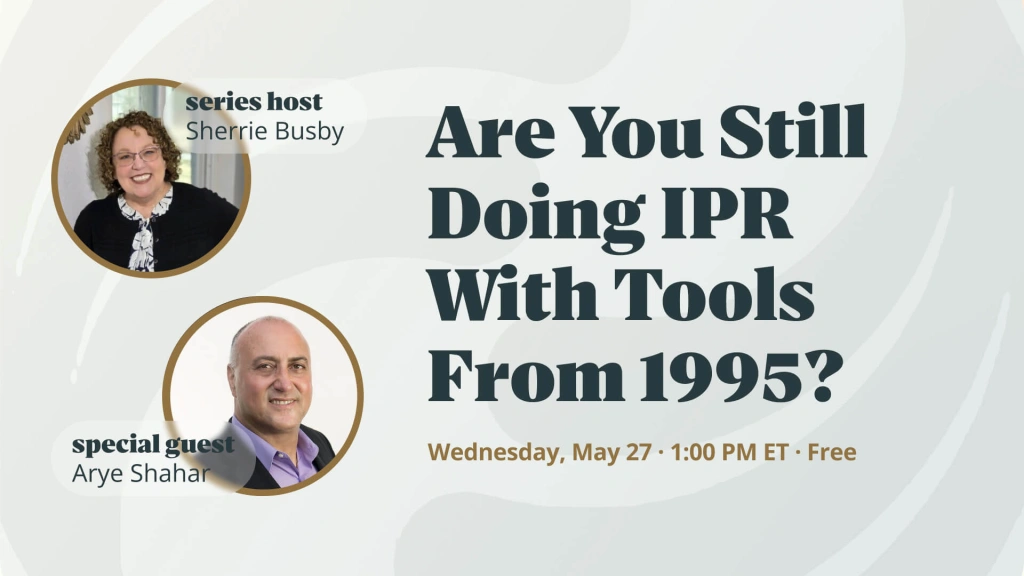
“Are You Still Doing IPR With Tools From 1995?”
In this 30-minute episode of Better Results on Purpose, ZenOne host Sherrie Busby sits down with Arye Shahar, President of Strauss Diamond Instruments, for a hands-on walkthrough of four instruments quietly reshaping modern dental workflows – from the engineering choices behind them to the clinical problems they solve.
Originally presented live on May 27, 2026 • 30 min • Replay available • Complimentary
Watch the webinar replay
Course Description
In this 30-minute episode, Sherrie Busby speaks with Arye Shahar, President of Strauss Diamond Instruments, about modern dental instruments designed to improve IPR, curing, composite cleanup, and caries detection workflows.
The session covers the clinical problems behind traditional hand-pulled IPR strips, single-wavelength curing lights, composite remnants after debonding, and limited visibility during cavity preparation. Participants will learn how instrument design, color-coded reduction systems, multiwave curing, oscillating discs, and UV black-light technology can support safer, more precise, and more predictable clinical workflows.
This program is complimentary. No fee is required to register for or view the program.
Educational Objectives
Upon completion of this program, participants will be able to:
- Describe common limitations of traditional hand-pulled IPR strips in modern clear aligner workflows.
- Explain how color-coded IPR strip progression can help support more consistent reduction depth.
- Identify the difference between single-wavelength and multiwave curing lights.
- Recognize how UV black-light technology can help reveal composite remnants and carious tissue that may be difficult to see under standard operatory lighting.
- Describe how oscillating disc motion differs from continuous rotary cutting motion in soft-tissue-adjacent workflows.
- Apply practical instrument maintenance and disinfection considerations to help protect curing lights, handpieces, and chairside tools.
Teaching methods

Live webinar
Structured conversation between host and subject-matter expert
Structured conversation between host and subject-matter expert

On-demand recording
Full replay available after the live program
Full replay available after the live program

Live Q&A
Real-time audience questions answered during the session
Real-time audience questions answered during the session

Session notes
Downloadable summary of the program content
Downloadable summary of the program content
Intended Audience & Prerequisites
This program is designed for dental team members involved in restorative, orthodontic, and chairside clinical workflows, including:
- dentists
- orthodontic teams
- dental assistants
- clinical leads
- hygienists
- practice owners
Basic familiarity with restorative dentistry, clear aligner workflows, curing lights, and chairside instrumentation is recommended. No prior experience with the specific instruments discussed is required.
About the Presenters
 |
Sherrie Busby, EDDA, CDSO, CDIPC – HostFlorida Expanded Duties Dental Assistant; Certified Dental Specialist — OSHA (Dental Compliance Institute); Certified in Dental Infection Prevention and Control (DANB DALE & ADS / OSAP). 40+ years of clinical and educational experience in dentistry. Former DA and OSHA/Infection Control Training Developer at Heartland Dental (2014–2025), supporting training for 1,800+ dental offices.
Curriculum Developer & Webinar Host, ZenOne |
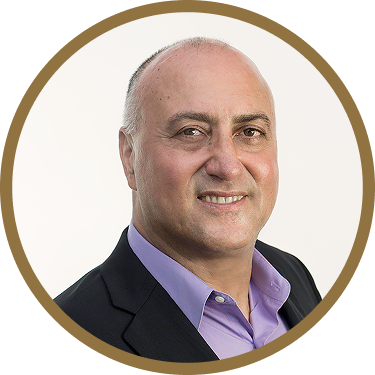 |
Arye Shahar – Featured GuestArye Shahar is President of Strauss Diamond Instruments and brings more than 30 years of experience in dental instrument innovation, manufacturing, and clinical workflow design. His work focuses on developing practical instrumentation for IPR, curing, fluorescent detection, composite cleanup, and safer chairside workflows.
President, Strauss Diamond Instruments |
Q&A from the webinar
Can a 30-year-old IPR technique be quietly compromising your modern clear aligner outcomes?
Can a 30-year-old IPR technique be quietly compromising your modern clear aligner outcomes?
Yes, hand-pulled strips create three compounding problems: ergonomic fatigue, inconsistent reduction depth, and torn gloves from over-gripping. The Magic Strip system addresses all three with a handle that supports a shaving motion instead of a drag, color-coded sizing from 0.1 to 0.5mm, and adjustable tension for either contouring or active reduction. The clinical takeaway: if your aligner script says 0.3mm and you’re eyeballing it by hand, you’re not actually executing the script.
What does “multiwave” actually mean – and which photoinitiators is your current curing light missing?
What does “multiwave” actually mean – and which photoinitiators is your current curing light missing?
Most curing lights emit a single blue wavelength (around 470nm), which activates camphorquinone but misses the proprietary photoinitiators used in many modern composites, cements, and bonding agents. Magicure combines blue, UV, and white wavelengths, so it polymerizes the full range of modern materials, not just the ones formulated for legacy lights. It took Arye’s engineering team in Israel 2.5 years to build, and it ships with three modes (soft, standard, boost) plus an auto-pulse mode for attachments.
Those brown spots that appear on patients months after debonding – what if they’re not the patient’s fault?
Those brown spots that appear on patients months after debonding – what if they’re not the patient’s fault?
They almost never are. The brown spots are leftover composite from attachment removal that wasn’t fully cleaned – and Arye points out why it happens even to careful clinicians: vision fatigue. After cleaning the first two or three attachments thoroughly, the clinician’s eye starts filling in the rest. The RemUV black-light handpiece eliminates the guesswork entirely – composite fluoresces under UV, so you can see exactly what’s left before you polish.
How is it physically possible for a spinning diamond disc to touch a lip and not cut it?
How is it physically possible for a spinning diamond disc to touch a lip and not cut it?
It isn’t spinning – it’s oscillating. The MagicGlide handpiece moves the disc 2-3mm side-to-side at 20,000-30,000 RPM, the same general motion pattern as an electric toothbrush. Diamond particles grind hard tissue (enamel) but slide harmlessly across soft tissue (tongue, lip, cheek) because there’s no continuous cutting edge in motion. That’s why the system ships without a guard – there’s nothing to guard against.
Are you paying $700–$900 for an electric handpiece when a $290 alternative does more?
Are you paying $700–$900 for an electric handpiece when a $290 alternative does more?
Quite possibly. The RemUV air handpiece is $290 and the electric is $460 – roughly 40% under typical market pricing for comparable specs. And RemUV adds something the mainstream handpieces don’t: integrated UV black-light that makes composite remnants and carious tissue visible during prep and cleanup. So you’re paying less for more functionality, not less for less.
Could your disinfecting wipe be the reason your curing light keeps failing?
Could your disinfecting wipe be the reason your curing light keeps failing?
Most likely yes – or specifically, the way it’s being used. Magicure is sealed, but aggressive disinfecting protocols (over-saturating wipes, rubbing hard against the rubber seals, letting chemicals pool) break that seal over time and cause internal liquid damage. Arye’s protocol: use a barrier sleeve as the first line of defense, then a brief wipe with chemical sitting 3-4 minutes – never soak, never scrub. Sherrie adds: use a cleaning wipe before a disinfecting wipe, and soap + water when in doubt.
How many patients should one IPR strip last – and how do you know when it’s dead?
How many patients should one IPR strip last – and how do you know when it’s dead?
About 6-7 patients on average before the diamonds dull noticeably, but that number is the floor, not the ceiling. With proper care (brushing the strip after use, sonic cleaning before autoclaving), lifespan extends significantly. The diagnostic is tactile: you’ll feel when the diamonds stop biting and start dragging. Strips are 75% glass fiber and autoclavable wet or dry, so they hold up to standard sterilization without degrading.
What can a black light show you during cavity prep that loupes and operatory light can’t?
What can a black light show you during cavity prep that loupes and operatory light can’t?
Decay. Specifically, carious tissue fluoresces green under UV, while healthy enamel and dentin don’t. That gives you a visual separation between what to remove and what to preserve – something that white operatory light and magnification physically can’t show, because they work in the wrong part of the spectrum. The clinical benefit: more conservative preps, fewer “I think that’s all of it” moments, and less unnecessary tooth structure removed.
Key takeaways from the session

Color-Coded IPR
Each strip color = an exact reduction depth, no guesswork
Each strip color = an exact reduction depth, no guesswork
Multiwave Curing
Three wavelengths cure materials a single-blue light physically can’t
Three wavelengths cure materials a single-blue light physically can’t
Oscillating Discs
Grinds enamel, but slides over tongue, lip, and cheek without cutting
Grinds enamel, but slides over tongue, lip, and cheek without cutting
Decay That Glows
Carious tissue fluoresces green under UV — see what to remove
Carious tissue fluoresces green under UV — see what to remove
Visible Composite
Adhesive remnants glow under black light, ending brown-spot returns
Adhesive remnants glow under black light, ending brown-spot returns
40% Less Cost
Mainstream specs at $290–$460 instead of $700–$900
Mainstream specs at $290–$460 instead of $700–$900
Additional Resources
- Strauss Diamond — Interproximal Reduction Tools
https://straussdiamond.com/shop/interproximal/ - Strauss Diamond — Magic Strip IPR System
https://straussdiamond.com/shop/magic-strip/ - Strauss Diamond — Magicure Curing Light System
https://straussdiamond.com/product/magicure-curing-light/ - Strauss Diamond — RemUV Black Light High Speed UV Handpiece
https://straussdiamond.com/product/remuv-high-speed-hand-piece/ - Session Handout / Slides
https://docs.google.com/presentation/d/1iQU4XKy3HrgRLHrDsQLYHpGyVcDhQ0zg/edit?usp=drive_link&ouid=111223030392744690181&rtpof=true&sd=true
Disclosure of Commercial Relationships
Disclosure: This webinar features Arye Shahar, President of Strauss Diamond Instruments. Product-specific instruments, clinical use cases, and workflow examples from Strauss Diamond Instruments may be discussed during the program. The educational content focuses on general principles of interproximal reduction, curing, fluorescent detection, composite cleanup, caries visualization, instrument handling, and equipment maintenance. No specific commercial product is required to understand the clinical concepts discussed. Any product-specific discussion, pricing, demonstration, or promotional information should be considered commercial content and held distinct from the educational portion of the activity. Commercial relationships of the presenters will be disclosed verbally at the start of the program.

