


Miranda Moore
RDA Lead Assistant, Beacon Dentistry
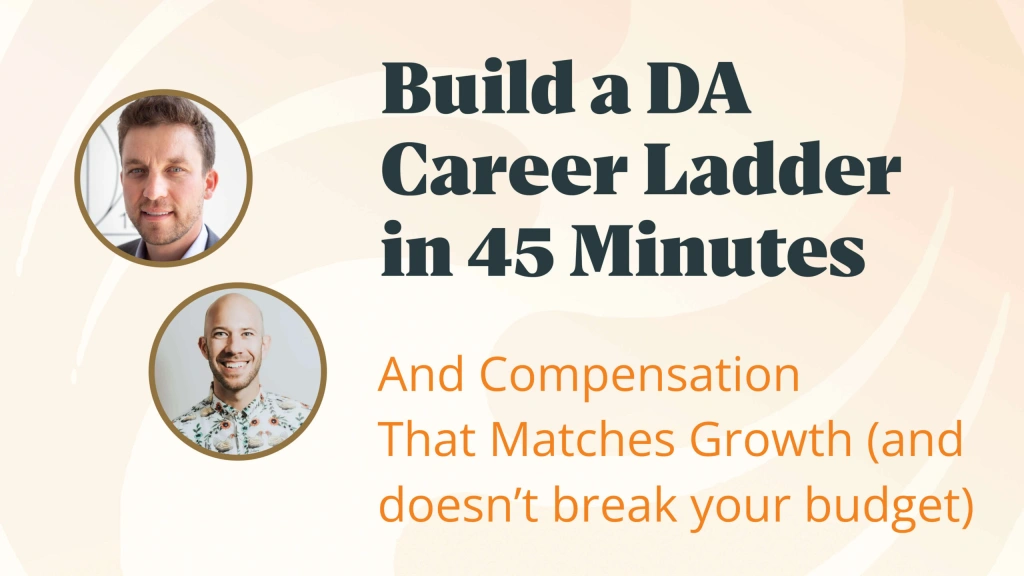
Dr. Bryan Stimmler: “Build a DA Career Ladder in 45 Minutes From Sterile Tech to Sr. DA – with compensation that matches growth”
This webinar breaks down a practical framework for helping dental assistants grow from entry-level support roles into higher-impact clinical and leadership positions. Instead of vague raise conversations, it shows how practices can create a clear path tied to skills, consistency, communication, and real value to the office.
Get Webinar Materials
Watch the webinar replay
What you’ll learn
- Why DA pay conversations often break down
- How a tiered system creates a real growth path
- What should count beyond clinical skill alone
- How to tie compensation to development without guessing
- How practices can use tiers for hiring, training, and retention
- Why consistency and sign-off matter before someone moves up

Q&A from the webinar
What is this DA career ladder, and how does the system work?
What is this DA career ladder, and how does the system work?
It is a tiered growth system with 6 levels, starting from sterile tech / entry-level support and building up to a highly skilled senior DA role. Each level has its own expectations across clinical skills, communication, leadership, and cross-training, and moving up means showing consistent competency, getting sign-off, and then earning the raise tied to that level. The webinar also makes it clear that this is a template, so offices can adapt the levels, responsibilities, and pay ranges to fit their own practice.
What if an assistant wants to stop at level 3?
What if an assistant wants to stop at level 3?
That can be okay. The webinar explains that most offices need a mix of levels, and not every assistant has to grow into the highest tier. But if someone stops growing, compensation conversations may eventually become harder.
Do you need competencies for each tier and should people be retested?
Do you need competencies for each tier and should people be retested?
Yes. The speakers recommend clear criteria for each level, plus retesting over time, because offices evolve and expectations change.
How do you keep lower-level assistants out of procedures they are not ready for?
How do you keep lower-level assistants out of procedures they are not ready for?
The webinar frames this as a training and staffing issue. In most practices, one assistant grows with the doctor into more advanced procedures, while others continue building skills. If someone cannot handle core procedures, that should be addressed through training or role clarity.
Where should a practice start?
Where should a practice start?
Start by deciding what each level should mean in your office, what compensation range makes sense, and where current team members honestly fit today. Then use that framework to guide training conversations.
What makes this better than a typical raise conversation?
What makes this better than a typical raise conversation?
It gives everyone a shared framework. Instead of vague opinions, the discussion becomes about demonstrated skills, expectations, and sign-offs.
Key takeaways from the session

Growth needs structure
Raises should follow skill growth, not just time in the role.
Raises should follow skill growth, not just time in the role.
Clinical skill is not enough
Higher levels also require communication, leadership, and teamwork.
Higher levels also require communication, leadership, and teamwork.
Pay should match value
Compensation should grow with the value an assistant adds.
Compensation should grow with the value an assistant adds.
Consistency matters
One good day is not enough for a promotion.
One good day is not enough for a promotion.
Teams need mixed levels
Not every assistant needs to reach the top tier.
Not every assistant needs to reach the top tier.
Clarity helps retention
Clear growth paths help people stay longer.
Clear growth paths help people stay longer.

