


Miranda Moore
RDA Lead Assistant, Beacon Dentistry
01/16/2024
From Dental Assistant to Clinical Manager: Career Path, Skills, Pay, and Growth Tips

~ 8 minutes to read
Dental assistants can build real career paths inside a dental practice. In this interview, Diana Arnaldo, Clinical Manager at Irving Park Family Dentistry, shares how she moved from dental assistant to clinical manager, what skills helped her grow, how inventory management became part of her leadership role, and what assistants can do to become more valuable to their offices.
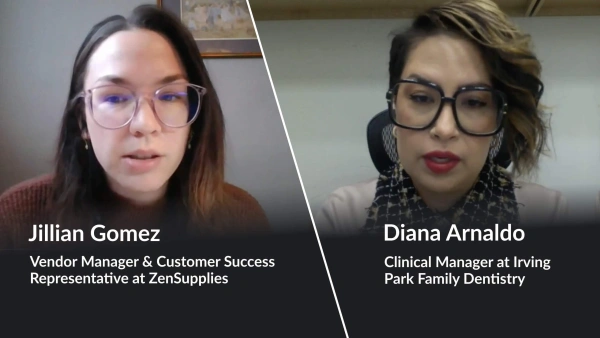
Welcome to our blog post featuring an interview between Jillian Gomez, Vendor Manager and Customer Success Representative, and Diana Arnaldo, Clinical Manager at Irving Park Family Dentistry. In this conversation, Diana shares her background, why she chose the dental field, what her current role looks like, and how she helps streamline inventory and supply ordering across multiple locations.
The main focus of the conversation is the career path of dental assistants. Can a dental assistant grow into a leadership role? What skills help an assistant earn more? Can a dental assistant make $45 an hour? Diana shares honest insight on compensation, certifications, training, mentorship, office budget management, and the growing role of dental assistants in modern practices.
You can watch the full interview here: Watch the full Diana Arnaldo interview on YouTube.
Another conversation about dental career growth: Read our interview with Elizabeth Bueno, Clinical Director of River Run Dental.
Quick Summary: Dental Assistant Career Growth
A dental assistant can grow into roles like lead assistant, inventory lead, clinical manager, or operations leader by building clinical skills, learning office systems, helping train other assistants, taking ownership of supply ordering, and becoming someone the doctor and team can rely on.
- Start with strong clinical basics: chairside assisting, sterilization, room setup, X-rays, impressions, and patient flow.
- Add certifications where allowed: sealants, coronal polishing, scanning, CAD/CAM, night guards, retainers, or other state-approved expanded duties.
- Learn inventory and ordering: supply management is one of the clearest ways to show leadership and protect the practice from delays.
- Build communication skills: assistants who can train, plan, and communicate clearly become more valuable to the whole office.
- Think beyond the operatory: the more you understand production, budget, scheduling, and workflow, the more growth opportunities you can create.
Dental Assistant Career Path: From Assistant to Clinical Manager
| Role | Main Responsibilities | How It Builds Career Value |
|---|---|---|
| Entry-Level Dental Assistant | Assists the doctor, seats patients, takes X-rays where allowed, sets up rooms, sterilizes instruments, and learns procedure flow. | Builds the clinical foundation every assistant needs before taking on more responsibility. |
| Experienced Dental Assistant | Understands materials, anticipates the doctor’s needs, helps manage the schedule, and supports patients with confidence. | Shows the practice that the assistant can work independently and keep the day moving. |
| Lead Dental Assistant | Trains assistants, manages room flow, helps solve problems, and keeps the back office organized. | Creates a stronger case for higher pay because the assistant is supporting both the doctor and the team. |
| Inventory Lead | Tracks supplies, manages reorder points, monitors usage, and helps prevent stockouts or wasted products. | Connects clinical work to office operations, budgeting, and production. |
| Clinical Manager | Manages assistants, handles ordering, supports multiple locations, coordinates labs, solves equipment issues, and keeps the clinical team running smoothly. | Moves the assistant into a leadership role with broader responsibility across the practice. |
Why Inventory Skills Help Dental Assistants Move Into Leadership
Inventory is one of the clearest ways for a dental assistant to show leadership. A strong assistant knows what the practice uses, when supplies run low, which items are tied to upcoming procedures, and how ordering affects the budget.
Diana explains that her office uses a master list to keep materials consistent across locations. That matters because providers may travel between offices and expect the same products to be available. A shared inventory system helps the team stay organized and makes it easier to avoid missing supplies.
She also uses a simple practical rule with her assistants: when an item gets down to a set level, such as three remaining units, the team writes it on the board and lets her know. That gives her time to compare what the team sees in the office with what the inventory system shows. This type of process helps prevent last-minute orders, patient delays, and unnecessary stress.
Interview Highlights With Diana Arnaldo
How Diana Started in Dentistry
Jillian: Diana, thank you so much for meeting with me today and agreeing to do this interview. Can you tell us what your role currently is in your dental office and what your career path as a dental assistant looked like?
Diana: I am the clinical manager for Irving Park Family Dentistry. We are a corporation of 10-plus offices, including offices in Illinois and Wisconsin. I got into the dental field when I was really young. I have been studying since I was in eighth grade.
Diana: I accidentally chipped a front tooth when I was 16. It was a tiny chip, but I did not feel comfortable. When the dentist put a filling on it, it completely changed me. I got my confidence back, and that was when I realized I wanted to help give people confidence with their smiles too.
Can Dental Assistants Grow Within a Dental Practice?
Jillian: When you first went into the dental field, how did you start?
Diana: It was just dental assisting. I did go to school first, so I knew the basics. I started with assisting the doctor and sterilizing, and then I moved my way up throughout the years.
Jillian: So you are proof that you can grow within a dental office?
Diana: Of course. Yes!
What a Clinical Manager Does Each Day
Jillian: What does your day typically look like now? How do you help your office stay organized with inventory and products?
Diana: It varies. It usually starts with checking my texts. I manage about 10 assistants, so if anyone calls off, I have to see how the day is going to go. I answer work emails, talk to labs, follow up on cases, and make sure the schedule is prepared for the next day. We work with around five labs and have about 10 to 20 cases come in every day.
Diana also shared that she still assists chairside when the team is short-staffed or when a patient feels more comfortable with her. Even as a clinical manager, she stays connected to patient care and the clinical team.
How Diana Manages Inventory and Ordering
Jillian: Do you help manage ZenOne at all, or do your assistants take the lead?
Diana: I do all the ordering. I have a master list that was created on your website, and I was able to share it with our other offices. Everybody has the same materials because we have providers who travel to other locations. That is what is really helpful about your website.
Jillian: Has it helped you keep track of inventory?
Diana: Yes. It is nice to have a warning that says, “Hey, you’re running low.” I also have a list that I take around the office when I’m doing inventory to double-check. If we see we are running low, we put it on a board, and then I compare it to what the system says. It is a very helpful system.
Diana’s Advice for Better Inventory Compliance
Jillian: Some offices struggle with marking items out or recording that something was taken from inventory. Do you have any advice?
Diana: You have to be aware of how much your office is using at all times. Not every month is going to be the same. If I am doing more root canals, I know that in a couple of weeks I may be doing more crowns. That means I need to stock a little extra on impression materials and impression trays.
Diana also explained that ordering a small amount of extra supply can help protect the schedule, especially when delivery times vary by supplier. Her assistants know that when an item gets down to a certain level, they need to write it on the board and let her know so she can keep a closer eye on it.
Can a Dental Assistant Make $45 an Hour?
One of the biggest questions in the interview was whether dental assistants can make $45 an hour. Diana’s answer was honest and practical: as a dental assistant only, that number may be high in many markets. But assistants can increase their earning potential by taking on more responsibility, learning more skills, earning certifications, helping with production, and growing into leadership roles.
Diana: As a dental assistant, you can definitely work your way up the ladder and learn as much as you can. You can be cross-trained with the front. You can let your provider know, “I’m doing the job of two people. I’m helping you with two people, and you are only paying one.” That may help increase your salary.
The bigger point is that dental assistant pay is tied to value, responsibility, market, experience, state rules, and the practice’s budget. A dental assistant who only performs basic duties may have less leverage than an assistant who also trains the team, manages ordering, understands production, supports lab cases, and helps keep the schedule moving.
Certifications and Skills That Help Dental Assistants Grow
Diana shared that her dental assistant certificate program helped because she entered the job already knowing how to take X-rays, take impressions, and understand procedure steps. She also explained that every office uses different materials, so assistants still need to keep learning on the job.
Additional certifications can also help assistants become more valuable. Depending on the state, this may include sealants, prophylaxis, polishing, scanning, CAD/CAM, night guards, retainers, or other expanded functions. Practices that invest in assistant training are also investing in the office, because trained assistants can help the doctor stay productive and keep the day running smoothly.
Different Levels of Dental Assisting
Diana explained that there are different levels of dental assisting. When she started, her day was focused on basic assisting, X-rays, room setup, and sterilization. Later, she became a main dental assistant with more responsibilities, including ordering and office maintenance. Eventually, she became a clinical manager responsible for assistants, ordering, equipment issues, and keeping the clinical side of the office running properly.
That career path matters because more responsibility gives assistants a stronger argument for higher pay. If an assistant can train others, manage supplies, solve problems, and protect the schedule, they are contributing more than chairside help alone.
How Dental Assistants Can Manage Stress and Stay Organized
Dental assisting is demanding. Assistants are on their feet, moving between operatories, helping patients, supporting doctors, cleaning rooms, and preparing for the next procedure. Diana recommends looking at the schedule the day before so the team can plan ahead.
She also emphasizes team culture. Dental offices can be stressful because assistants work with different providers, front desk staff, patients, and personalities. A strong team that can laugh together, support each other, and build relationships outside of work can make the day feel much smoother.
What Dental Assistants Should Do During Downtime
Downtime is rare, but Diana’s team has a list they can use when it happens. That list includes stocking rooms, checking lab cases, preparing for the next day, cleaning, reorganizing, and making sure supplies are ready before the office gets busy again.
This is a simple but powerful habit. When assistants use downtime well, they prevent future stress. They also show leadership because they are solving problems before those problems slow down the doctor or affect the patient experience.
How Practices Can Pay Dental Assistants Fairly While Managing the Budget
Diana recommends looking at the local market, minimum wage, experience level, benefits, production, and the value the assistant brings to the office. If a practice cannot meet a desired hourly rate, benefits may help balance the offer. But owners and managers should also remember that experienced assistants help the practice produce, reduce waste, and keep the clinical schedule on track.
She also points out that fair pay connects to good systems. When the team follows standard procedures and avoids misuse of materials, resources, and time, it helps the office manage costs and maximize production.
Final Advice for Dental Assistants
Diana’s advice to dental assistants is simple: do not stay stuck. Keep learning. Ask questions. Try to stay one or two steps ahead of the provider. Learn from doctors, mentors, other assistants, and the daily work happening around you.
The more you know, the more helpful you become. And the more helpful you become, the more opportunities you can create for yourself inside the dental office.
Frequently Asked Questions
Can a dental assistant become a clinical manager?
Yes. Many clinical managers start as dental assistants and grow by learning clinical systems, training other team members, managing supplies, supporting doctors, and helping the practice run more smoothly.
What skills help dental assistants get promoted?
Strong communication, organization, chairside skills, inventory management, leadership, problem-solving, and the ability to stay ahead of the schedule can all help dental assistants grow into higher-level roles.
Can dental assistants help manage inventory?
Yes. Dental assistants often understand daily supply usage better than anyone else. That makes them a natural fit for tracking inventory, setting reorder points, managing supply lists, and preventing stockouts.
Can a dental assistant make $45 an hour?
It depends on the market, state rules, experience, certifications, and responsibilities. Diana’s view is that $45 an hour may be high for a dental assistant role alone, but assistants can increase their earning potential by growing into lead, inventory, management, or cross-trained roles.
Should dental practices invest in dental assistant training?
Yes. When a practice invests in assistants, it also invests in better workflow, stronger production, better patient care, and a more capable clinical team.
Join 1400+ dental professionals, shop from your favorite
suppliers, compare prices instantly, and save over $17,000/year
Try our platform free for 14 days.
Get the latest ZenOne updates and product launches in your inbox
Don't miss the latest news!
Receive exclusive offers and news straight to your inbox!
Continue reading
10/02/2026
~ 7 minutes to read
09/23/2026
~ 7 minutes to read

09/11/2026
~ 7 minutes to read
Let's discover how we can help you

Tiger Safarov
Hi, I'm Tiger, the CEO at ZenOne, and I'm happy to personally ensure your success with ZenOne. Send me your latest invoice or a statement for a Free Savings Analysis.
Ask me a question:

