


Miranda Moore
RDA Lead Assistant, Beacon Dentistry

01/27/2024
What Percentage of Revenue Should Dental Supplies Cost?

~ 5 minutes to read
Many dental practices hear that supplies should stay around 5% of collections, but that number is not equally realistic for every office. Practice size, case mix, storage, shipping habits, and supplier pricing all affect where your supply budget lands.
This guide explains when 5% is realistic, when it is not, and what to do if your current number is too high. We are using a practice collecting $700K per year with five treatment rooms, one sterilization room, one lab, and no storage so the examples stay practical.
Quick answer: most practices should aim for a dental supplies budget in the mid-single digits as a percentage of collections. If you are spending 8-14%, you need control before you chase better pricing. If you are already near 5-6%, then price comparison, invoice reconciliation, and stricter purchasing rules can help you move lower.
What is a healthy dental supplies budget percentage?
A healthy dental supplies budget usually lands in the mid-single digits as a percentage of collections. The exact number depends on your procedure mix, storage limits, ordering discipline, and how often you place rush orders. For many general practices, the real goal is not blindly hitting 5.0%. The goal is building a system that keeps supply spend predictable, controlled, and easy to explain month after month.
If your supply budget is consistently above target, treat it as a process problem first. You may be buying too many duplicate products, ordering outside an approved list, missing shipping costs, or letting “specials” drive purchasing decisions.
Why some practices spend 8% to 14%
Scenario 1: Dr. Awesome: “I spend anywhere from 8-14% on dental supplies per month.” If you and your office can relate, the first step is not finding cheaper gloves. The first step is getting control of what is being purchased, who is approving it, and how it is tracked.
At this stage, price-shopping alone will not fix the problem. You need visibility, approval rules, and one master list of approved products.
These are the steps:
- Do not blame your assistant. This is a systems issue, not a single-person issue. Many practices have been here, and many still are.
- Review all orders yourself until spending is under control. Anything that touches your credit card needs approval.
- Record every approved order in a spreadsheet and compare approved orders against actual charges on the statement.
- If you find charges without approval, investigate immediately. Sometimes it is a process miss. Sometimes it is intentional.
- Build a spreadsheet of all products purchased in the last 12 months with invoice pricing. Yes, all of them.
- Review the full list with your assistant and decide which products you will no longer purchase.
- Create a master list of approved products and require all future purchases to come from that list unless you approve an exception.
- Watch quantities carefully. Ask questions like, “Do we really need 5 boxes of lidocaine when not many procedures are scheduled in the next 2-3 weeks?”
These steps alone can often save about 4% because now every order is visible and approved. Estimated savings: 4%, or about $28,000 per year in this example.

What has to change before you chase lower prices
Before you compare suppliers, fix the operating system inside the practice. If you do not have one approved list, one approval flow, and one place to review spending, lower prices will only reduce a messy budget slightly. They will not solve the bigger leak.
- Standardize products before you negotiate.
- Centralize storage where possible so the team can actually see what is on hand.
- Track charges against approved orders every month.
- Treat supply spend as a percentage of collections, not as a random pile of invoices.
Once you have those basics in place, price comparison starts to matter a lot more.
When 5% is realistic
Scenario 2: Dr. Awesome: “I spend between 5-8% on dental supplies.” This is not terrible, but it still leaves room for meaningful savings. At this stage, a better supplier strategy and tighter product standardization can often bring another 2-3% in savings.
- Rebuild your spreadsheet and add columns for alternative distributors so you can compare current pricing against other options.
- Your current distributors
- Safco Dental
- Darby Dental (through Synergy group)
- Dental City
- Send the spreadsheet to the distributors above with your current price column included, but remove the name of the current vendor.
- Ask them to provide pricing for exact matches and, where appropriate, house-brand alternatives for similar products.
- Ask for free shipping and note it directly in the spreadsheet so you can verify future orders against the agreement.
- Stick to the spreadsheet. Any order outside the approved list should require your sign-off.
- Once you see 10-20% savings across the board, choose vendors based on product cost and shipping, not emotion.
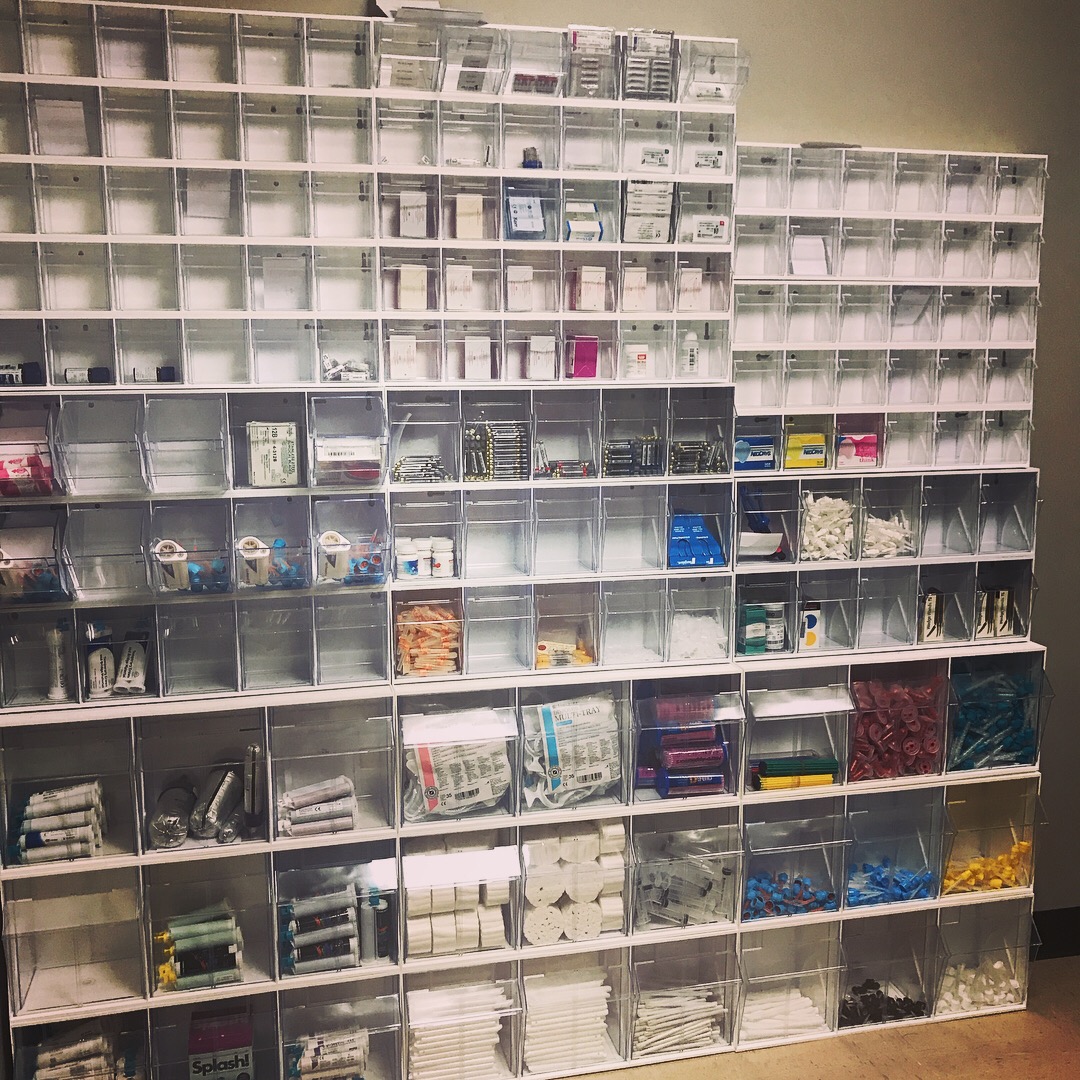
- Centralize products in one location where possible. Tip-out bins and visible shelving make it easier to manage what you can see. (For more information on purchasing tip out bins, visit https://simplastics.com/zen27.)
- Do not let “deal chasing” on gray-market sites create stock gaps, delayed deliveries, or extra emergency orders.
Estimated savings at this stage: about $21,000 per year.
How to push from 5% to 4-5%
Scenario 3: Dr. Awesome: “I want to spend 4-5% on dental supplies.” This is a more advanced stage. At this point, the doctor is already monitoring what gets purchased, where it is purchased from, and how much is spent. The next gains come from reconciliation and discipline.
- Reconcile invoices. Compare what was ordered against what was invoiced. Verify shipping, locked pricing, credits, and returns. Every invoice should match what was approved.
- Stop letting specials set the budget. If you need two boxes of gloves, buy two boxes of gloves. A “3+1” special can still push you over budget when you only needed two boxes this month.
This is where many practices lose sight of the real goal. Saving 2-3% overall requires respecting the percentage, not getting distracted by a lower per-box price on items you did not need yet.
Estimated savings at this stage: about $7,000 per year.
A simple worksheet to audit your supply spend
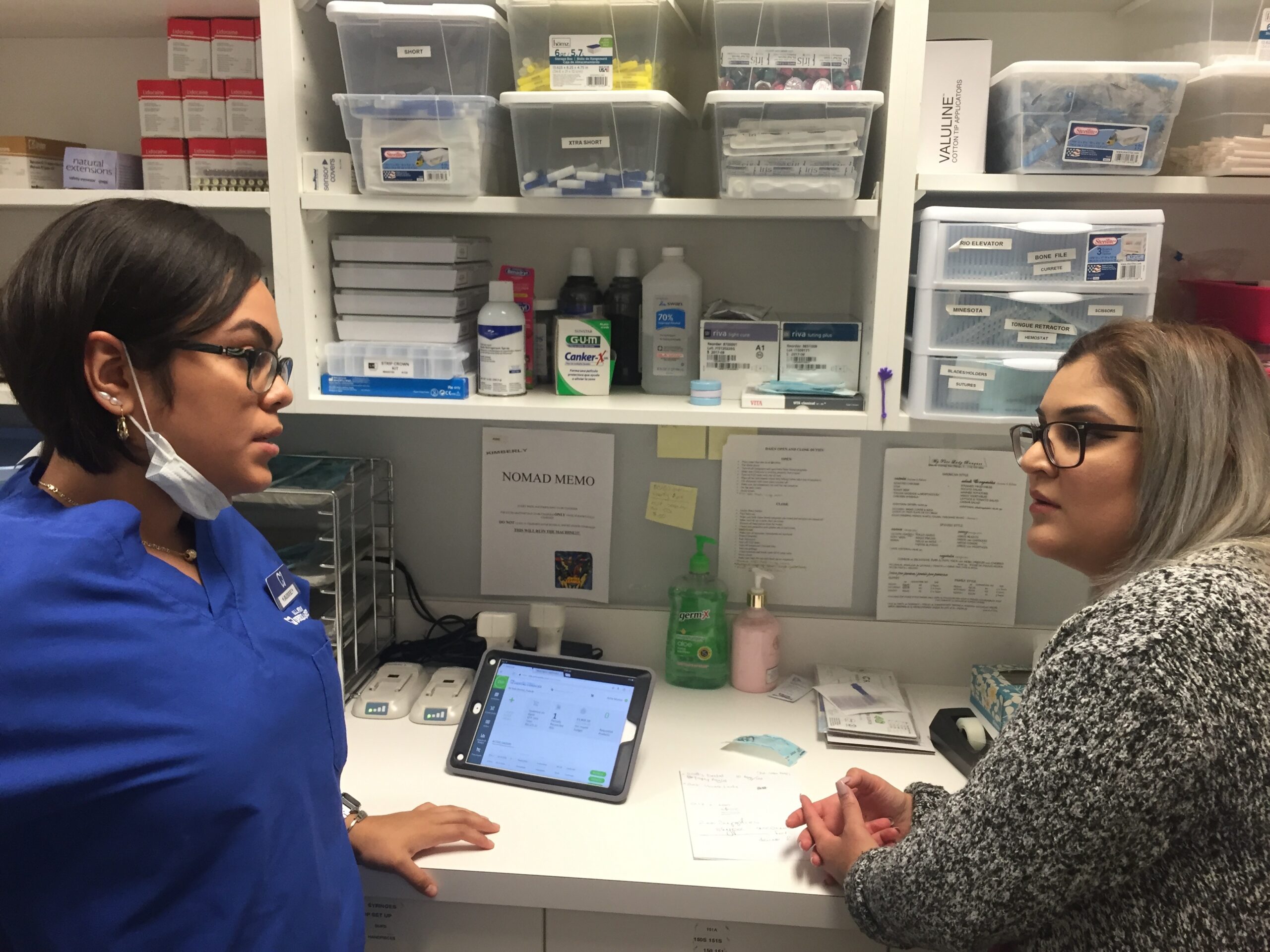
Use this worksheet before you make any major change to your vendors or product mix.
- Last 12 months of collections
- Last 12 months of supply spend
- Current supply spend %
- Top 20 purchased items
- Duplicate SKUs found
- Rush orders in the last 90 days
- Expired products discarded
If you cannot answer those seven questions quickly, your next step is not “find cheaper vendors.” Your next step is “build visibility.”
Conclusion
If all three scenarios and their steps are implemented, the total opportunity in this example reaches roughly $56,000 per year. Your exact savings may be lower or higher depending on how much process cleanup your practice needs, but the point is the same: the biggest gains come from control, standardization, and disciplined ordering.
This is not an attack on doctors, teams, or distributors. It is an action plan for practices that want to do something about supply overspending instead of just talking about it.
Last reviewed: April 2026. Benchmarks vary by specialty, production, and ordering process.
Related reading
Dental Practice Overhead Benchmarks
How to Save Money on Dental Supplies
Join 1400+ dental professionals, shop from your favorite
suppliers, compare prices instantly, and save over $17,000/year
Try our platform free for 14 days.
Get the latest ZenOne updates and product launches in your inbox
Don't miss the latest news!
Receive exclusive offers and news straight to your inbox!
Continue reading
09/01/2026
~ 9 minutes to read

08/27/2026
~ 9 minutes to read
08/24/2026
~ 10 minutes to read
Let's discover how we can help you

Tiger Safarov
Hi, I'm Tiger, the CEO at ZenOne, and I'm happy to personally ensure your success with ZenOne. Send me your latest invoice or a statement for a Free Savings Analysis.
Ask me a question:

