


Miranda Moore
RDA Lead Assistant, Beacon Dentistry

01/22/2026
How to Save Money on Dental Supplies Without Cutting Quality

~ 7 minutes to read
You can save money on dental supplies without lowering the quality of patient care. Start by comparing the total price across suppliers. Then cut rush orders, remove duplicate products, buy bulk supplies in usable amounts and track spending each month.
The goal is a fair price for clinically approved products, with less waste and fewer avoidable fees. Affordable dental supplies without compromising quality start with an approved item list and a total-cost comparison.
See how ZenOne helps practices compare prices and control supply spending
Five Ways to Reduce Dental Supply Costs
- Compare unit prices, shipping costs and order minimums across suppliers.
- Set reorder points so the team can avoid rush shipping.
- Remove duplicate products and keep an approved item list.
- Track supply spending by category and cost per patient.
- Reduce the staff time spent counting stock and placing orders.
Choose the First Cost-Cutting Step
| Problem | First action | Number to watch |
|---|---|---|
| Prices change between orders | Compare the top 10 items each month | Total delivered cost per unit |
| Frequent rush orders | Set reorder points for critical supplies | Rush orders per month |
| Cluttered storage rooms | Remove duplicate SKUs | Expired and unused stock |
| Budget changes are hard to explain | Track spending by category | Supply cost per patient |
| Ordering takes several hours | Use one item list and one order record | Staff hours per order cycle |
Why Dental Practices Overspend on Supplies
Dental offices often overspend because prices, quantities and product choices go unchecked. The same item may cost less elsewhere. Staff may order a case when the practice can use only half before it expires. A missed count can also lead to expensive overnight shipping.
Your own records give the best starting point. Review supply spending as a share of collections, then compare it with your practice type and case mix. Broader dental practice overhead benchmarks can help you spot a concern. The practice revenue discussion from Pearl provides more context for revenue and overhead.
Some sources place dental supplies near the mid-single digits as a share of collections. For example, Overjet discusses supply expenses near 5% to 6% of revenue. Treat outside benchmarks as a check, since specialty mix and accounting choices can change the result. ZenOne’s article on the 5% dental supplies budget explains why one target doesn’t fit every office.
Signs Your Dental Office Needs Better Cost Control
- Supply spending rises while patient volume stays flat.
- The team places several emergency orders each month.
- Different rooms stock several versions of the same product.
- Expired items appear during routine shelf counts.
- No one can report supply cost per patient or procedure.
Large SKU lists can weaken buying control. Operation Dental reports reducing its annual item list from more than 13,500 SKUs to just over 1,500. That example comes from a large group, so smaller offices should set a goal based on their own product needs.
Price changes tied to tariffs can add pressure. Review the latest supplier notices before setting a yearly budget. These reports discuss dental tariff effects and costs a dental practice can control.
1. Compare Dental Supply Prices
Price comparison can lower dental supply costs without changing the products your clinical team trusts. Compare the same brand, item number, unit size and package quantity. A box price alone can be misleading.
The Tooth & Coin dental supply guide recommends reviewing high-cost or frequently purchased items. Start with the 10 products that account for the most spending.
Use a Total-Cost Price Check
| Item | Current supplier | Other supplier | Total-cost winner |
|---|---|---|---|
| Brand, SKU and unit size | Unit price plus shipping | Unit price plus shipping | Lower delivered cost after minimums and fees |
Record contract pricing, rebates and return rules in the same sheet. A slightly higher unit price may cost less after shipping. Review the top 10 items every 30 days and the rest each quarter.
Import costs can widen the price gap between sellers. This report on tariff risks for dental suppliers explains why imported goods may see uneven price changes.
Manual and Software Price Comparison
A small practice can compare supplier websites with a spreadsheet. Larger orders may take too long to check by hand. Dental purchasing software can place several supplier prices in one screen.
Dr. Brandon Johnson of Brushy Creek Dentistry reported saving $2,000 per month after using ZenOne to compare supply prices. His result belongs to one practice and doesn’t promise the same result for every office.
Preferred supplier programs can also reduce purchase work. This guide reviews dental inventory systems and distributor programs.
Compare approved products across suppliers with ZenOne
Bulk Buying Without Overstocking
Bulk pricing saves money only when the practice can use the product on time. Check average monthly use, shelf life and storage space before buying a case.
- Calculate how many units the team uses each month.
- Divide the case quantity by monthly use.
- Check the expiration date and the manufacturer’s storage directions.
- Include shipping and any order minimum in the unit cost.
- Buy less when expected use leaves too little time before expiration.
This rule works for gloves, masks and cleaners. Products with short opened-life rules or changing clinical demand need smaller orders.
2. Stop Rush Orders With Reorder Points
Rush orders raise shipping costs and limit supplier choice. A reorder point tells the team to buy before stock reaches the emergency level.
Reorder point = average use during lead time + safety stock
Suppose a practice uses three boxes of gloves each week and delivery takes five workdays. A reorder point of four boxes may leave enough time for a routine order. Track actual use and delivery time before setting the final number.
Software can update counts through barcode scans and low-stock alerts. The guide to inventory tracking in dental practices explains the setup in more detail.
A manual process can work too. Operation Dental’s inventory process uses planned counts and combined orders to control stock and shipping.
3. Reduce Duplicate Dental Supply SKUs
Duplicate products tie up cash and make counts harder. The problem often starts when several people order similar items under different names.
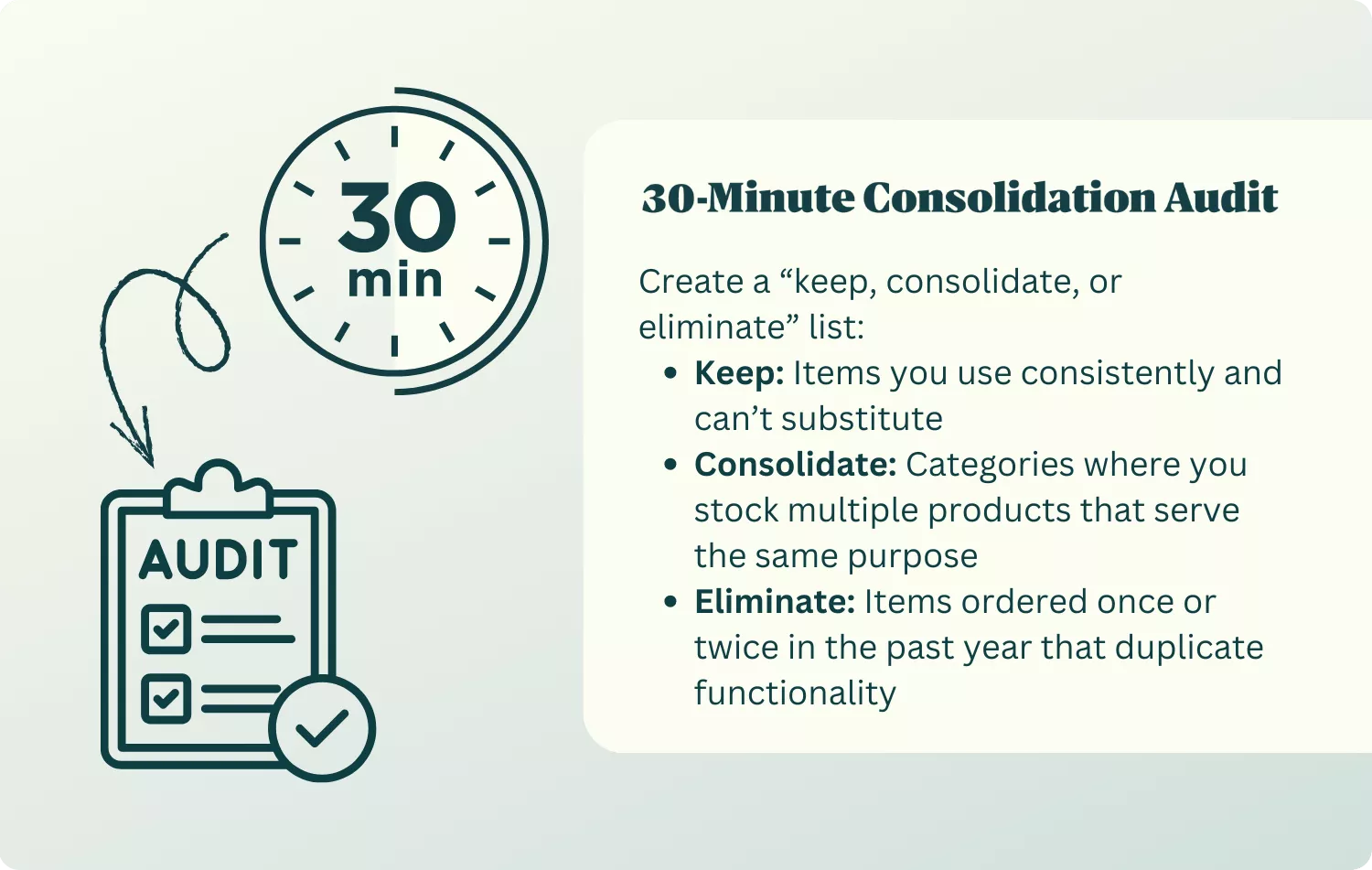
A 30-Minute SKU Review
- Pull six months of supply orders.
- Sort items by total spending.
- Mark duplicate brands or products that serve the same purpose.
- Ask the clinical team which products must remain approved.
- Create one preferred-product list for future orders.
Don’t remove a product based on price alone. Check clinical use, quality, training needs, return terms and product availability before making a change.
4. Track Dental Supply Spending Each Month
A single invoice total won’t show where spending changed. Group purchases into categories such as infection control, restorative materials, preventive supplies, anesthesia, office supplies and lab costs.
Compare each category with the prior month and the same month last year. Check patient volume at the same time. Blue & Co. discusses cost visibility in higher-margin dental practices.
Calculate Dental Supply Cost per Patient
Supply cost per patient = monthly clinical supply cost / completed patient visits
Use the same expense categories each month. A rising cost per patient can point to price increases, waste, product changes or a shift in treatment mix. It doesn’t prove waste by itself.
A spreadsheet can track these numbers. Inventory software can sort purchases by category and warn the team as a budget limit approaches.
5. Cut the Time Spent Ordering Supplies
Ordering time has a real labor cost. Count the hours spent searching for items, comparing prices, placing orders and checking deliveries. Then fix the step that consumes the most time.
- Use one approved item list.
- Set one count day and one order day.
- Assign an inventory lead and a backup.
- Keep purchase orders and receiving records together.
Miranda Moore reported cutting each order from two or three hours to 15 or 20 minutes after bringing products into ZenOne.
Dr. Nikki reported gaining back a full ordering day each month after office managers took over the process. These are individual practice results, so use your current time and costs to judge the value.
Choosing Manual Tracking, a GPO or Software
A small office with few products may do well with a spreadsheet and monthly price checks. A group purchasing organization can offer contracted pricing. Sowingo reviews GPOs and other dental inventory options.
The California Dental Association describes manual inventory methods such as a supply list, budget and organized bins. These methods need one person to keep the records current.
Software fits practices where several people order, supplies sit in many rooms or price checks take too long. It can also help multi-location teams view counts before buying duplicate stock.
Common Problems During the Change
- Staff may skip counts when the new task takes too many steps. This article covers training and time limits in dental practices.
- Using more suppliers requires clear backup choices and safety stock. See this dental purchasing cycle guide.
- Early reorder points may be wrong. Review the use history and adjust them. This medical inventory article covers related stock problems.
Dental Equipment Needs Separate Buying Rules
Equipment purchases need a different review than disposable supplies. Compare the purchase price, warranty, service terms, installation, staff training and expected years of use. Ask for the full ownership cost before choosing the lowest bid.
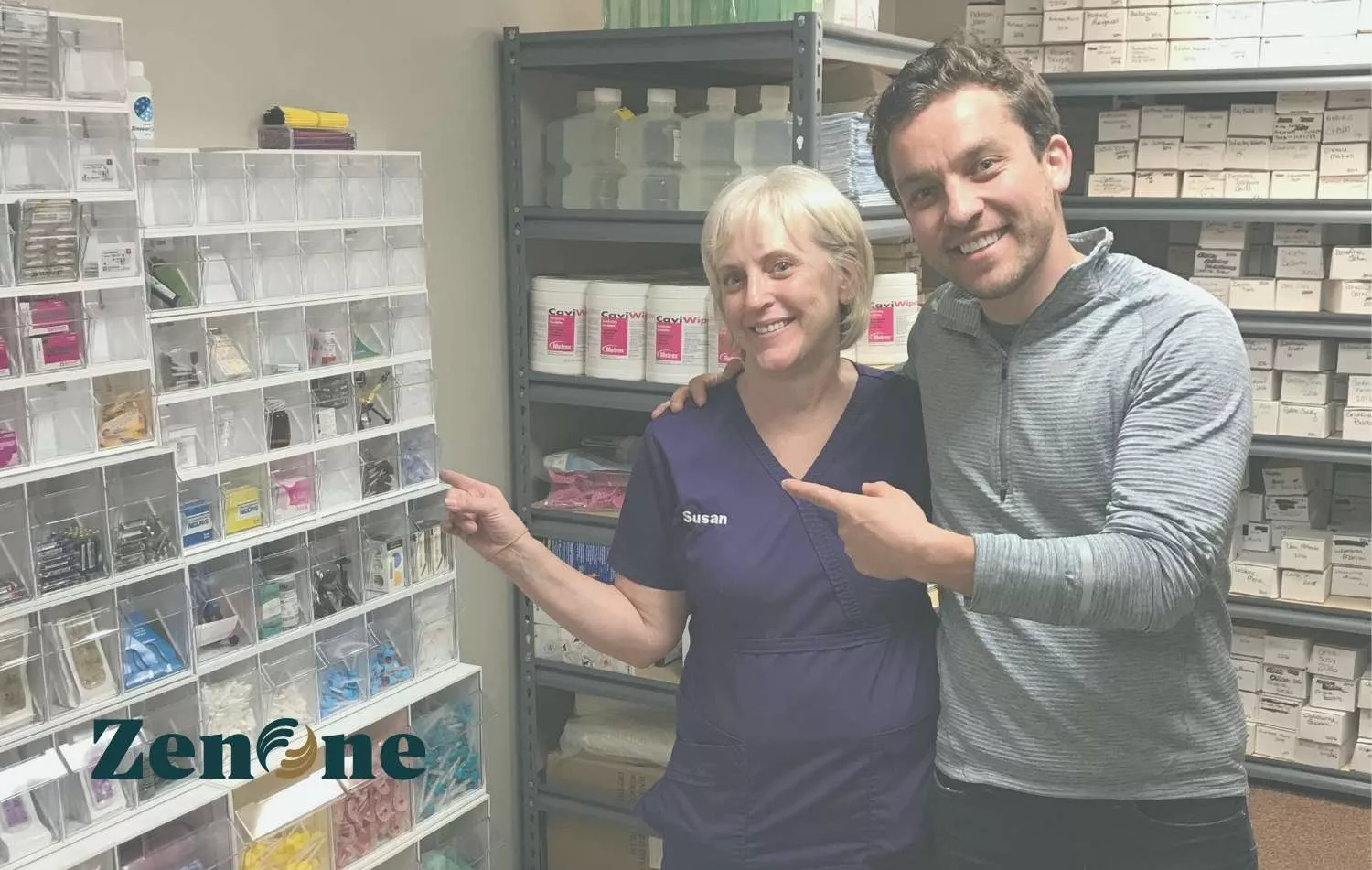
Results Reported by ZenOne Customers
Dr. Brandon Johnson
Dr. Brandon Johnson’s case study reports $24,000 in yearly savings after the practice began comparing supplier prices. The team tested the new process beside its old method before making the full change.
Dr. Nikki
Dr. Nikki’s case study reports that office managers took over a monthly ordering task that once required a full day of the owner’s time.
Miranda Moore
Miranda Moore’s case study reports an 85% drop in ordering time after products from 18 vendors were placed in one system.
Dental Supply Cost Questions
Dental Supply Cost as a Share of Revenue
Many general practices use a mid-single-digit percentage of collections as a reference. Specialty mix, product choices and accounting methods can move the number. Review your own monthly trend before making cuts.
Supplier Price-Check Schedule
Check the top 10 high-spend items each month. Review the full approved item list each quarter. Run another check after a supplier announces a price change.
One Supplier or Several Suppliers
One supplier can reduce order work. Several suppliers may lower the delivered cost. Compare the value of staff time, shipping, contract terms and item prices before choosing.
Time Needed to Lower Dental Supply Costs
Price checks and fewer rush orders can produce early savings. SKU cleanup and accurate reorder points take longer because they need count and use data.
Put the Five Cost Controls Into One Process
Begin with the last six months of orders. Compare the top 10 items, set reorder points and remove duplicate SKUs. Track spending by category and cost per patient at the next monthly review.
Related guides cover dental overhead benchmarks, how to manage dental inventory and setting a dental supplies budget.
A spreadsheet may be enough for a small office with one buyer. When several people order or prices take hours to compare, test ZenOne free for 14 days with your approved supply list. Measure the price difference and staff time before deciding whether it fits.
Join 1400+ dental professionals, shop from your favorite
suppliers, compare prices instantly, and save over $17,000/year
Try our platform free for 14 days.
Get the latest ZenOne updates and product launches in your inbox
Don't miss the latest news!
Receive exclusive offers and news straight to your inbox!
Continue reading
09/01/2026
~ 9 minutes to read

08/27/2026
~ 9 minutes to read
08/24/2026
~ 10 minutes to read
Let's discover how we can help you

Tiger Safarov
Hi, I'm Tiger, the CEO at ZenOne, and I'm happy to personally ensure your success with ZenOne. Send me your latest invoice or a statement for a Free Savings Analysis.
Ask me a question:

